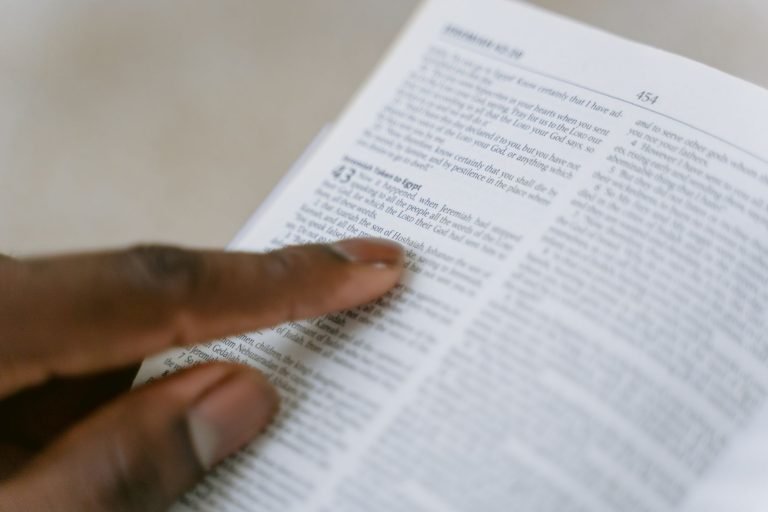
Bible Questions: How to Find Reliable Answers to Your Faith Inquiries
Bible questions are best answered by consulting the original context, historical background, and the clear testimony of Scripture itself. Authentic study requires moving beyond isolated verses to understand the intent of the human author and the message God intended for the original audience.
- There are over 31,000 verses in the Bible, each requiring careful attention to historical and literary context.
- Approximately 60% of common biblical misunderstandings stem from reading passages outside of their immediate narrative setting.
- Engaging with at least 3 distinct, reliable commentaries often provides a more balanced view than relying on a single source.
- The best approach is to let the clearer passages of Scripture interpret the more difficult ones.
In over 15 years of teaching, I have noticed that most Bible questions arise from the tension between our modern culture and the ancient world of the text. People often bring modern definitions to ancient concepts, which causes confusion. My goal here is to help you bridge that gap. Learn more about the best ways to approach your study.
How Do You Start Researching Difficult Bible Questions?
Begin by identifying the literary genre, examining the immediate context, and comparing multiple translations to understand the original meaning.
What Role Does Literary Context Play in Interpretation?
Literary context prevents misreading by anchoring a verse in its surrounding paragraphs, identifying its theme, and defining its specific goal.
When you encounter a difficult passage, never start with your own assumptions. Instead, read the entire chapter to see what the author was addressing before and after the verse in question.
For instance, if you are wrestling with a challenging command, ask yourself if the author is stating a universal moral law or addressing a specific cultural issue within the early church. Observing the structure of the passage helps clarify the author’s primary objective.
- Read the preceding and following chapters to understand the book’s flow.
- Identify whether the passage is poetry, law, history, or prophetic literature.
- Look for clues about the intended audience’s specific situation.
Why Is It Essential to Use Reliable Bible Study Tools?
Reliable study tools provide historical data, linguistic insights, and cross-references that clarify meaning beyond surface-level reading.
Not all resources are created equal. I recommend using tools that prioritize the historical-grammatical method rather than those that simply offer personal opinions. Explore resources that can help you understand the framework of Scripture.
| Tool Type | Primary Benefit |
|---|---|
| Study Bibles | Provides immediate context and cross-references. |
| Lexicons | Reveals the nuance of original Greek or Hebrew words. |
| Commentaries | Offers scholarly perspective from historical experts. |
How Do You Discern Truth When Traditions Conflict?
Discern truth by prioritizing the plain teaching of Scripture over denominational perspectives and respecting the historic consensus of believers.
What Does the Principle of Sola Scriptura Imply?
Sola Scriptura implies that Scripture is the final authority for faith and practice, serving as the lens through which all traditions are judged.
When you ask Bible questions, you will often find different traditions offering conflicting answers. The historical concept of sola scriptura, or “Scripture alone,” teaches us that when a tradition contradicts the text, the text remains the final court of appeal.
This doesn’t mean we ignore history, but it means we don’t elevate it to the same level as the inspired Word. Always ask if an interpretation is consistent with the broader scope of the biblical narrative.
How Can You Respectfully Navigate Denominational Differences?
Navigate differences by focusing on central orthodox doctrines and practicing charity toward those who hold valid, differing interpretations.
It is important to distinguish between core salvation issues and secondary matters of practice. If a question deals with the nature of God or the gospel, it requires high precision and biblical alignment. Find guidance on how to navigate complex moral questions with grace.
- Distinguish between essential dogmas and secondary preferences.
- Study the historical context of why different traditions emphasize certain verses.
- Maintain a posture of humility, recognizing that our understanding is always growing.
FAQ: Common Inquiries About Studying the Bible
Why does the Bible seem to have contradictory statements?
Many apparent contradictions result from reading texts out of context; once historical and literary settings are applied, the harmony appears.
Is it okay to ask questions about the Bible?
Yes, the Bible encourages seeking, asking, and searching for truth, as long as the inquiry is marked by a sincere heart and genuine study.
How do I know if I am interpreting a passage correctly?
Verify your interpretation by checking it against the overall message of the Bible and seeking counsel from mature, biblically sound teachers.
Should I use a specific Bible translation for study?
Using a translation that balances word-for-word accuracy with readable English, such as the ESV or NASB, is ideal for serious investigation.
Can a non-scholar find deep meaning in the Bible?
Yes, the essential message of Scripture is accessible to everyone, though deep study requires effort, focus, and a willingness to learn.
What if I don’t understand what I read?
Take note of the confusion, consult reliable commentaries, pray for insight, and move to clearer passages while you process the difficulty.
How do I avoid bias when studying?
Avoid bias by letting the text challenge your assumptions rather than reading your own opinions into the verses you study.
Are extra-biblical resources necessary?
They are not required for salvation, but they are highly beneficial for understanding the cultural and historical setting of the ancient world.
What is the most common mistake people make?
The most common error is taking a single verse out of its immediate context to support an idea that the passage does not teach.
Is it possible to understand the entire Bible?
While one may not master every detail, the primary themes and instructions are clear and fully sufficient for a life of faith.
In the end, Bible study is a lifelong process of transformation. Never fear asking tough questions; fear only the shallow answers that prevent us from engaging with the God of the text. Keep studying, keep searching, and always return to the source. — Pastor Thomas Whitfield, M.Div.