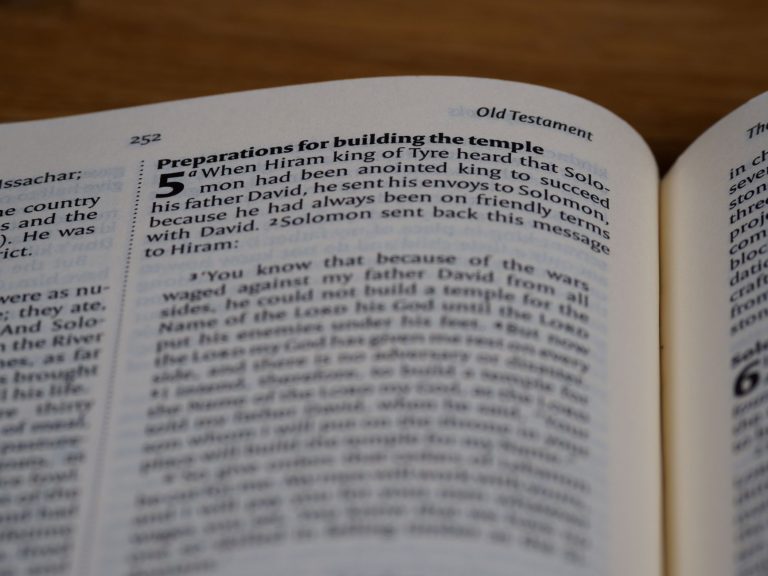
Who divided the Bible into chapters and verses? Why and when was it done?
Who divided the Bible into chapters and verses?
Stephen Langton assigned chapters in the 13th century, and printer Robert Estienne added numbered verses to his Greek Testament in 1551.
For centuries, the original manuscripts of the Bible existed as continuous blocks of text without modern navigational markers. In my 15+ years of teaching, I have observed that most students assume these divisions were part of the inspired text. Understanding their human origins helps us better use these tools for studying the canon effectively.
- Stephen Langton, Archbishop of Canterbury, developed the chapter system around 1227.
- Robert Estienne established the modern verse numbering system in his 1551 edition.
- These additions are human organizational tools rather than divinely inspired text.
- The 1560 Geneva Bible was the first full English translation to use both chapters and verses.
Why were chapters added to the Bible?
Chapters were created to help medieval scholars and teachers locate specific passages within the long scrolls of the Old and New Testament.
Before the 13th century, citing a passage was difficult because the text lacked uniform landmarks. Teachers needed a way to reference specific sections during lectures at the University of Paris. The adoption of chapters allowed for standardized referencing across multiple copies of the Latin Vulgate.
- Standardization of theological instruction in universities.
- Improved speed in locating prophetic or historical narratives.
- Facilitation of concordances for deeper scriptural analysis.
Who was Stephen Langton and his contribution?
Stephen Langton was an Archbishop of Canterbury who used his extensive theological training to organize the Vulgate into 1,189 chapters.
Langton’s work proved incredibly durable, though not without its flaws. He divided the text based on his reading of the flow of narrative and logic, which remains the basis for our modern structure. While some divisions seem arbitrary today, they created a necessary framework for the church.
Why and when were verses added to the text?
Numbered verses were introduced in 1551 to aid printers and readers in comparing texts across different language translations rapidly.
As printing technology matured, scholars wanted a more granular way to pinpoint text. By the time of the Reformation, the need for quick cross-referencing became a priority for both translators and preachers. This shift transformed the Bible from a public reading document into a personal study tool.
How did Robert Estienne influence Bible printing?
Robert Estienne, a French printer, applied verse numbers to his 1551 Greek-Latin New Testament to help scholarly text comparisons.
Estienne was a visionary who recognized that the massive influx of printed Bibles needed a common index. His system allowed a reader to find a specific thought without scanning an entire chapter. This development was essential for the rapid expansion of literacy during the 16th century.
What was the impact of the 1560 Geneva Bible?
The Geneva Bible was the first English translation to fully incorporate both chapter and verse markers, revolutionizing personal home study.
This edition became the household standard for decades because it made the text accessible and searchable. It remains a hallmark of Christian living as the first Bible to encourage laypeople to search the scriptures on their own. The format we use today is almost identical to this historic version.
How should Christians view these organizational additions today?
These markers are helpful human conventions for study but should not be mistaken for the original, continuous flow of the holy text.
Are chapter and verse numbers inspired?
No, the numbers were added by human scholars nearly 1,500 years after the last apostolic writings were completed by the early authors.
It is important to remember that the Holy Spirit inspired the words of the prophets and apostles, but did not inspire the chapter breaks. Sometimes, a chapter break cuts a sentence or a thought in half. A wise student of the Bible will read across these breaks to capture the author’s original intent.
What are the dangers of ignoring context?
Using verses in isolation often leads to proof-texting where a single sentence is detached from the surrounding logic of the argument.
When we treat verses like individual “fortune cookies,” we risk distorting their meaning. I always encourage my students to read the paragraph surrounding their focus verse. This simple practice guards against misinterpretation and honors the author’s voice.
Frequently Asked Questions
Did the original biblical authors use verse numbers?
No, the original authors wrote in continuous prose without any chapters or verses, as these were added centuries after their deaths.
Why do some chapters seem to start in the wrong place?
Because the system was created by medieval scholars, their divisions were based on logic of the time rather than the authorial structure.
Is it better to read without verse numbers?
Reading from a reader’s edition without numbers can help you focus on the flow of the argument, but numbers remain vital for referencing.
When did the first English Bible use this system?
The 1560 Geneva Bible was the first English edition to use both chapters and numbered verses for the entire text.
Were there earlier attempts to divide the Bible?
Yes, the Jewish tradition divided the Torah into portions called parashot, but these differed from the modern Christian chapter system.
Does every Bible translation use the same verses?
Mostly yes, though slight variations exist between translations regarding punctuation and verse grouping for certain passages.
How do scholars choose where to place a verse?
They generally follow the established historical tradition to ensure that biblical citations remain consistent for all readers worldwide.
Is there a “best” way to cite the Bible?
The standard format of Book Chapter:Verse remains the most effective and universally recognized method for identifying biblical passages.
Can I ignore chapters when I am doing personal study?
Yes, ignoring chapters can actually help you see the bigger picture and narrative flow that the original audience would have experienced.
Who created the system we use for the Old Testament?
Stephen Langton’s system was applied to the entire Latin Bible, which then became the basis for later Old and New Testament divisions.
Ultimately, these organizational tools are servants, not masters. They exist to help us engage with the Word of God more effectively, not to constrain its meaning. Use the numbers to find the treasure, then look beyond them to the truth they contain. — Pastor Thomas Whitfield, M.Div.