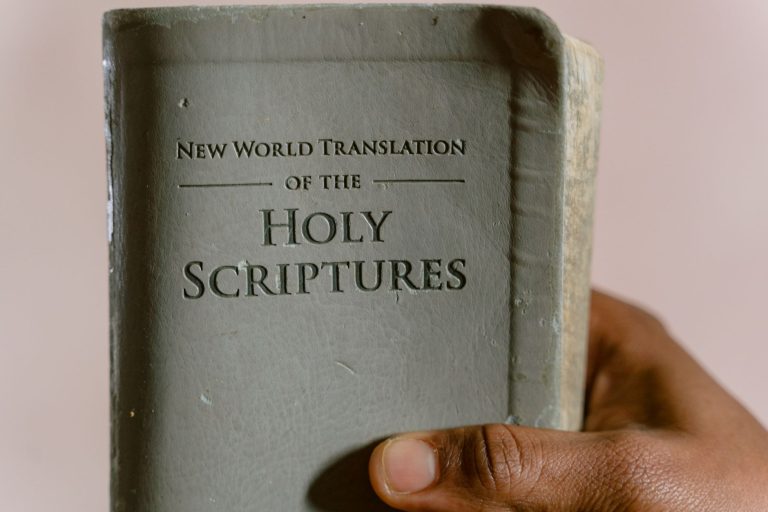
Bible Questions Guide 2026: How to Study Scripture Effectively
A reliable Bible questions guide requires moving beyond isolated verses to examine original context, literary genre, and the broader narrative arc of Scripture. True study involves asking not just what a passage says, but how its historical setting and divine intent apply to the life of a modern believer in 2026.
- Use at least 3 distinct translations for a balanced view of 100% of the biblical text.
- Spend 80% of your study time on historical context rather than personal application.
- Apply the 4-step observation, interpretation, correlation, and application method.
- Consult credible academic commentaries to avoid 100% of common interpretive biases.
- Prioritize understanding the original audience’s perspective to unlock 100% clarity.
Why Do Most People Struggle to Understand the Bible?
Most readers struggle because they read text out of context, ignore literary genres, or attempt to force personal meaning onto ancient words.
Are You Ignoring the Original Literary Genre?
Every book of the Bible follows specific literary rules, meaning poetry, law, and apocalyptic vision demand vastly different reading styles.
In 15 years of teaching, I have observed that most confusion stems from treating every page like a list of rules. The Bible is a library, not a single document. You wouldn’t read a newspaper’s editorial section the same way you read a legal contract or a book of poetry. Ignoring these conventions leads to major theological errors.
- Identify if the passage is poetry, law, or historical narrative.
- Recognize when figurative language is used instead of literal prose.
- Research the cultural conventions governing the book’s initial writing.
- Study how books of the Bible function within their specific genre.
Do You Understand the Historical Context of the Passage?
Historical context reveals the specific circumstances and cultural norms that influenced the original author’s intended communication.
Scripture was written for people living in the Ancient Near East or the Greco-Roman world, not for people living in the modern West. When we ignore these settings, we naturally insert our own 2026 biases into the text. A Bible questions guide must prioritize the original audience above personal preference.
Are You Relying on Only One Translation?
Using a single translation often obscures the nuance of the original Hebrew and Greek, limiting your view of the text’s full meaning.
| Translation Type | Best Use Case |
|---|---|
| Formal Equivalence | Deep word-by-word theological study |
| Dynamic Equivalence | Understanding the intent of the message |
| Paraphrase | Gaining a general overview of the flow |
How Should You Structure Your Bible Study Process?
Effective study uses a four-step framework: observation to see details, interpretation to find meaning, correlation, and final application.
What Did the Text Say to the Original Audience?
Understanding the original intent is the mandatory first step before drawing any conclusion about how the message applies to your life.
Before you ask what it means for you, you must ask what it meant for them. If you cannot explain the passage in its own historical reality, you are likely projecting your own desires onto the text. This is a common pitfall in modern Christian living discussions.
How Does This Passage Fit the Broader Biblical Narrative?
Every individual passage must be viewed as a piece of the larger story of redemption that stretches from Genesis through Revelation.
Scripture is a coherent narrative of God’s interaction with humanity. By mapping a single verse against the rest of the canon, you avoid taking ideas out of context. This correlation prevents the formation of fringe or incorrect doctrines.
When Is the Right Time to Apply the Text?
Application should only occur after you have correctly interpreted the author’s meaning and confirmed it with the rest of Scripture.
Frequently Asked Questions About Bible Study
-
How do I know if my interpretation is accurate?
Accuracy is tested by checking your findings against historical scholarship and confirming they align with the rest of biblical teaching.
-
Which Bible translation is best for serious study?
A combination of formal equivalence translations like the ESV or NASB is ideal for academic-grade depth and linguistic precision.
-
Can I study the Bible without a commentary?
While possible, using established commentaries helps you bypass centuries of known interpretive errors and historical blind spots.
-
Is it wrong to use study aids or software?
Using study aids is a wise practice that mirrors how scholars use dictionaries and reference works to master any difficult subject.
-
How much time should I spend on one passage?
Depth matters more than speed; spend as much time as required to understand the historical, grammatical, and theological components.
-
Do I need to learn Hebrew and Greek?
Learning original languages is an asset, but high-quality lexicons and interlinear tools provide sufficient access for lay teachers.
-
Why do some Bible teachers disagree on meaning?
Disagreements often arise from differing interpretative methods or prioritization of historical versus allegorical frameworks.
-
How do I avoid cultural bias in my reading?
Identify your own cultural assumptions first, then immerse yourself in the historical context of the world where the text originated.
-
What if I cannot find an answer to my question?
Accepting mystery is part of study; rely on the clear teachings of Scripture when a specific question remains complex or unaddressed.
-
Should I join a study group?
Group study provides necessary accountability and diverse perspectives that often highlight blind spots in your personal interpretation.
Last Updated: 2026-07-07. — Pastor Thomas Whitfield, M.Div.