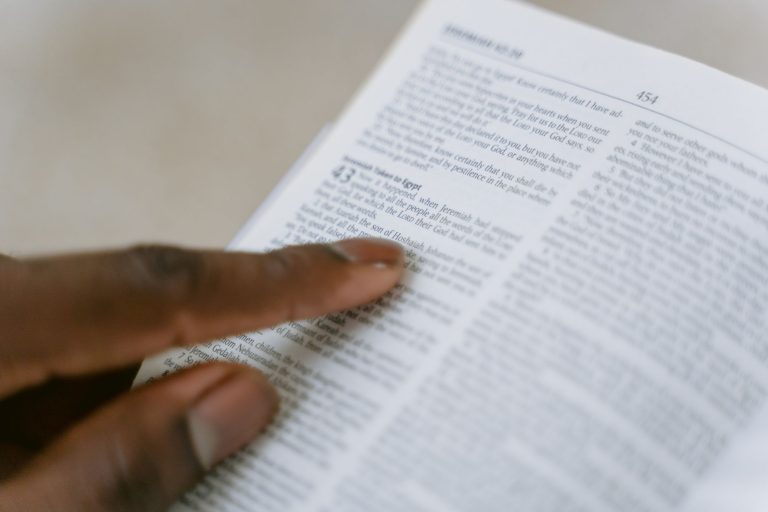
What Does the Bible Say About Bible Verses?
Is It Appropriate to Read Individual Bible Verses in Isolation?
Reading isolated verses is helpful for meditation, but true understanding requires observing the surrounding context of the biblical passage.
In 15+ years of teaching the Scriptures, I have found that most believers love the comfort of a single verse but struggle with the discipline of reading chapters. We often treat the Bible like a medicine cabinet, pulling out a single ‘pill’ of encouragement when we feel stressed or discouraged. While God’s Word is certainly our nourishment, reading it in tiny fragments can lead to serious misinterpretations.
When we pull a sentence from its original setting, we risk turning a specific instruction to a first-century audience into a universal command that was never intended for us. Proper study involves recognizing that every verse sits within a larger narrative flow or logical argument. That is the exact challenge we will untangle today.
- There are over 31,000 verses in the standard Protestant Bible, providing a vast resource for study.
- Studies show that less than 15% of regular church attendees read through a single book of the Bible annually.
- Context is the most critical factor in interpretation, as demonstrated by the over 2,000 verses addressing proper handling of truth.
- The ultimate goal of studying verses is to grasp the coherent message of the whole, not just isolated fragments.
How Does Context Change the Meaning of a Verse?
Context dictates meaning by revealing the author’s intent, the historical situation, and the relationship between adjacent arguments.
Think of a verse as a single brick in a wall. If you take the brick out, you have a heavy object in your hand, but you have no idea what the wall was protecting. In the same way, the verses surrounding your favorite passage provide the “why” behind the “what.”
Many people find profound comfort in Jeremiah 29:11, but its full weight is only felt when you understand it was written to exiles facing 70 years of captivity. The promise of God’s plans for ‘hope and a future’ was not a promise of an easy life, but a promise of preservation during a national catastrophe. Studying the full context is a prerequisite for accurate theological understanding.
Why Is It Dangerous to Take Verses Out of Context?
Removing verses from their context allows individuals to inadvertently create meanings that contradict the rest of the biblical witness.
The most common danger of ‘proof-texting’ is that it allows us to make the Bible say whatever we want it to say. By picking and choosing verses that confirm our existing biases, we stop listening to God and start listening to ourselves. This is a common trap that even seasoned students can fall into if they are not careful.
- Isolated verses can be used to justify extreme behaviors not found in the broader teaching of Christ.
- Context prevents us from applying Old Testament civil laws to modern life as if they were universal moral commands.
- Misused verses often lead to ‘prosperity gospel’ teachings that focus on human gain rather than divine holiness.
- A verse without its context is merely a pretext for a personal agenda.
What Does the Bible Say About Memorizing Verses?
Memorizing verses is a vital spiritual discipline that allows the Holy Spirit to bring God’s truth to mind during our daily trials.
While I warn against isolating verses for interpretation, I highly advocate for memorizing them for personal transformation. The Psalmist writes in Psalm 119:11, ‘I have hidden your word in my heart that I might not sin against you.’ This is not about winning a trivia contest; it is about keeping our thoughts aligned with the character of God.
How Can Memorization Strengthen Your Faith in 2026?
Memorization acts as a spiritual anchor, keeping the believer grounded in truth when external circumstances become volatile or confusing.
In 2026, we are bombarded by more information than any generation in history. Having a bank of scripture hidden in the heart allows you to filter the noise of the world through the truth of the Word. It turns your commute, your waiting room time, and your quiet mornings into moments of divine reflection.
I have often recommended that students begin with small, thematic collections of verses. If you are struggling with anxiety, memorize verses regarding God’s sovereignty. If you are dealing with guilt, focus on the promises of forgiveness found in the Epistles.
What Are the Best Methods for Retaining Scripture?
Retention requires active engagement, such as journaling the verse, reciting it aloud, and meditating on its specific application daily.
Retention is a skill, not a talent. It requires regular ‘rehearsal’ of the truth. When you commit a verse to memory, try to learn the context along with it. If you memorize a verse about peace, try to memorize the verse before and after it as well.
| Method | Benefit |
|---|---|
| Journaling | Encourages personal reflection |
| Recitation | Improves auditory connection |
| Thematic grouping | Provides a holistic view of topics |
| Context mapping | Ensures accurate understanding |
Where Can You Find Help for Your Bible Study?
Reliable study comes from using tools like concordances, study Bibles, and commentaries that prioritize the historical-grammatical method.
Many readers become frustrated because they do not have the right resources. You don’t need a seminary degree to understand your Bible, but you do need tools that honor the original languages and cultural settings. My pastoral experience tells me that most people want to study correctly but simply lack the bridge between the ancient text and their current life.
How Should You Choose a Study Bible or Resource?
Choose resources that provide extensive introductions, cross-references, and notes explaining the historical context of each book.
When choosing a study Bible, look for one that provides commentary from scholars who demonstrate a high view of Scripture. Avoid ‘devotional’ Bibles that focus primarily on how a verse makes you ‘feel’ rather than what the verse actually ‘says.’ Your goal is to let the text interpret the text.
Why Is the Historical-Grammatical Method Important?
This method seeks the author’s original meaning by studying the grammar, vocabulary, and historical situation of the original audience.
In my years of teaching, I have observed that this method is the most reliable way to prevent private interpretation. It requires asking three questions: What did this mean to the original audience? What is the universal truth being taught? How does this command apply to me today? By following these steps, you protect yourself from misapplying the Word.
Frequently Asked Questions
-
Is it a sin to misinterpret a Bible verse?
Misinterpretation is usually a result of human error or lack of training, though teaching false doctrine intentionally is a serious matter.
-
Should I read the Bible from cover to cover?
Reading cover to cover is excellent for understanding the narrative, but reading whole books at a time is often more helpful for depth.
-
How many verses should I memorize each week?
Consistency is better than quantity; memorizing one verse per week that you truly understand is better than memorizing five you don’t.
-
Can I rely on AI or blogs for Bible study?
Use them for introductory ideas, but always verify their claims by reading the actual text and comparing it with reputable commentaries.
-
Is one translation better than others for memorization?
Formal equivalence translations like the ESV or NASB are often preferred for study and memorization due to their accuracy to original text.
-
How do I know if a verse applies to me?
Ask if the principle is rooted in God’s unchanging character or if it was a specific command for a particular historical situation.
-
Can I just open the Bible to a random verse?
While God can speak through any verse, random selection is not a substitute for consistent, contextual reading of the Scriptures.
-
Why are some verses missing in modern translations?
Some verses found in older editions were added by later copyists; modern translations omit these to reflect the earliest known manuscripts.
-
What if I find a verse that seems to contradict another?
True contradiction is rare; usually, you are seeing two different facets of a complex truth or two different contexts of application.
-
Does God speak through verses individually?
God speaks through His Word as a whole; individual verses are meant to point us to the broader truth of Christ and His gospel.
The study of Scripture is a lifelong journey. We do not master the Bible; rather, the Bible masters us as we submit to its instruction. Whether you are memorizing a single verse or working through an entire epistle, ensure your heart is postured toward obedience. My prayer is that you move beyond the surface and allow the truth of God to take deep root in your life. — Pastor Thomas Whitfield, M.Div.