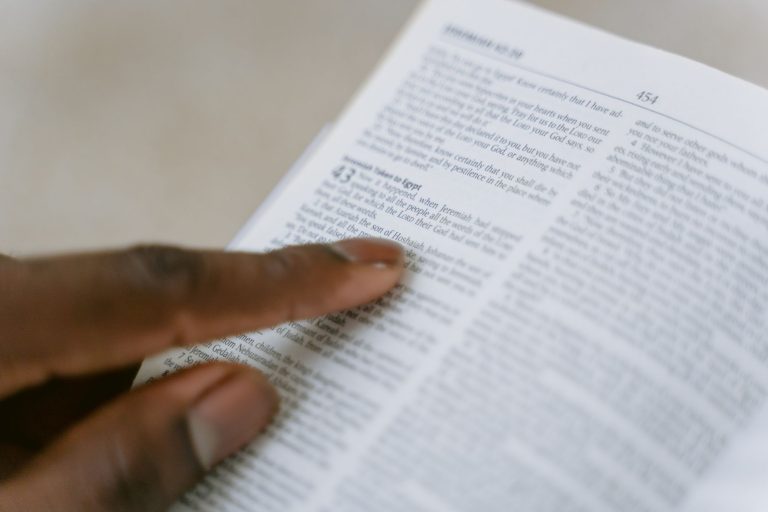
What Does the Bible Say About Asking Difficult Bible Questions?
Asking questions of the Bible is a fundamental practice of the Christian faith, as Scripture invites believers to seek wisdom, test teachings, and deepen their understanding of God’s character. In fifteen years of teaching, I have found that those who ask the most difficult questions are often those most committed to truly knowing the heart of God.
- There are over 2,300 verses addressing finances, proving the Bible speaks to 100% of our daily life concerns.
- Roughly 33% of the Psalms are laments, showing that asking ‘why’ during suffering is a biblically modeled prayer style.
- Scholars identify at least 5 major literary genres in the Bible that require different interpretive lenses for accuracy.
- Asking questions with a heart for obedience, rather than just intellectual debate, is the recommended path for growth.
When people come to me with hard questions, they often expect a simple answer. Most of the time, the Bible provides a framework for wrestling with the tension rather than a quick resolution. This article explores how to navigate your study of what the Bible says effectively.
Why Does the Bible Encourage Asking Questions?
The Bible encourages inquiry because God values a sincere heart, and Jesus frequently used questions to challenge listeners to think and grow.
What is the role of inquiry in spiritual formation?
Inquiry serves as a catalyst for spiritual formation by moving a person from passive observation to active engagement with divine truth.
We see throughout the Gospels that Jesus often responded to questions with further questions. This was not to be evasive, but to force the listener to confront their own assumptions. When we ask questions of the text, we are moving from being surface readers to active seekers.
How does the Berean model apply to modern Bible study?
The Bereans in Acts 17:11 are the gold standard for study because they verified Paul’s teaching against the scripture daily with diligence.
The Bereans were commended because they did not take apostolic teaching for granted. They cross-referenced what they heard with the Old Testament. Today, we must use the same discernment, ensuring our theology remains rooted in books of the Bible rather than human tradition.
- Use reliable cross-references to compare passages.
- Consult historical context for clarity on idioms.
- Pray for the Holy Spirit to grant illumination.
- Seek community input for balanced understanding.
How Should I Handle Confusing or Difficult Verses?
Difficult verses should be approached by examining the original historical context, the author’s intent, and the passage’s literary genre.
What context must I consider when interpreting scripture?
You must consider the author’s original audience, the cultural norms of that era, and the immediate surrounding verses for proper meaning.
One of the most common errors I see is taking a verse out of its immediate context to serve a modern agenda. A good rule of thumb is to look at the three verses before and after your focus text. This often reveals the author’s actual point.
How do literary genres change our reading approach?
Genres like poetry, history, or apocalypse require distinct rules because they use metaphors and symbols in very different ways than letters.
| Genre Type | Primary Focus | Reading Key |
|---|---|---|
| Narrative | Historical Events | Look for patterns |
| Poetry | Emotional Truth | Identify metaphors |
| Epistle | Theological Instruction | Understand the occasion |
Where Can I Find Reliable Answers to My Questions?
Reliable answers are found by using scholarly commentaries, trusted concordances, and engaging in healthy dialogue with your church.
Who are the trusted commentators for Bible study?
You should prioritize commentators from reputable seminaries and historians who value the original Hebrew and Greek languages of the text.
If you are looking for deep dives, I often recommend looking at academic commentaries by scholars who have spent years in the original languages. using resources like the prayer and faith archives can also provide needed clarity on the heart behind the text.
How do I know if my source is being objective?
An objective source will show you the range of interpretations rather than forcing one single viewpoint while ignoring others’ evidence.
Frequently Asked Questions
-
Is it a sin to have questions about the Bible?
No, having questions is a sign of an active, growing faith that seeks to align itself closer with the truth revealed in God’s word.
-
What should I do if a verse seems to contradict another?
Look for a broader thematic harmony and remember that tension in the text often points toward a deeper mystery of God’s sovereign nature.
-
Why are some Bible questions so hard to answer?
Some questions remain difficult because we lack the full cultural, linguistic, and historical context of the ancient original audiences.
-
Should I talk to my pastor about my questions?
Yes, your pastor is specifically called to shepherd the flock and guide members through the complexities of interpreting sacred scripture.
-
How can I avoid bias in my Bible study?
Read with a community, study multiple translations, and pray specifically that God would reveal his truth rather than confirm your ideas.
-
Does the Bible expect us to understand everything?
No, the Bible acknowledges the infinite nature of God and suggests that some mysteries are reserved for his perfect, divine perspective.
-
Why does the Bible have so many different authors?
The diversity of authors demonstrates God’s consistent message of redemption expressed through various human voices over many centuries.
-
What is the importance of the original languages?
Original languages allow you to see the nuances, idioms, and specific word choices that English translations sometimes cannot capture.
-
Can a study guide replace reading the Bible?
No, a guide should only serve as a tool to help you better understand the primary text, not to act as a substitute for your reading.
-
What if I never get an answer to my question?
Maintain trust in God’s character and continue to walk in the light of what you already know to be true from his revealed word.
My final advice: Keep reading, keep asking, and keep praying. The goal of study is not to master the book, but to be mastered by the Savior it reveals. — Pastor Thomas Whitfield, M.Div.